
10 things Architecture school taught me unintentionally
When I was young I loved to draw, especially interiors. I remember drawing a wardrobe, a window with curtains, a rug, and always a bed. I remember that one day, I showed my dad one of my room drawings. He did something that completely changed my life at that age (5 years old - I think). He added, by drawing just an extra line, the 3rd dimension to my "cool" 2d bed. I instantly saw the bed in 3D and it was like I just got the keys to a whole new world!
Fast forward a couple of years and I am in Architecture University because let's face it, I wanted to draw, build, and think up cool stuff, and Architecture school was the perfect place for that. I remember telling myself that it was going to be so cool and definitely not as hard as I kept hearing everywhere around me: "Say goodbye to sleep, to social life, make friends in architecture school because those will be the only people you'll see for the next 6 years of your life". Haha, little did I know. But that is a story for another time ;)
What I wanted to share with you are some "lessons" that I learned there, for those of you who are thinking about becoming an architect or interior designer. Or just for those of you who want to decorate your homes on your own.
Why or how do these lessons help you? Well, let me know after you finish reading! So grab a cup of coffee, because it's gonna be a long one this time. Comfy? Ready, set, go!
1. Everything has to have a story/reason behind it.
There is this movie quote that says: "The stretching hand that doesn't tell a story, will not receive anything". When you create something, you generate an idea or a thought. In architecture or interior design, this thought is called a "concept". Having a concept means taking an idea and developing the project around it.
Take this concept for example. By combining two Japanese symbols - their national flag and their famous sun umbrella called wagasa - a building concept for a Japanese cultural center was born. Like in life, when you understand why somebody does something, you know how to approach them next time. Or by understanding why an object came to life its purpose), you appreciate it more.
It is the difference between an office chair that is simply used as a chair to sit on at your desk and an ergonomic office chair that has a curved back designed to especially support your spine comfortably at your desk for long periods of time.
Understanding the story behind something is everything.

Architecture building concept sketch ©Detail Movement
2. Does it work - functionality?

Interior design floorplan sketch ©Detail Movement
Also known in the architecture and interior design world as "thinking where everything goes so that it is safe to use + shortest distance in between". Or simply put, "how to be practical". You would not put, for example, a desk and a chair with its back next to a window. You would place the desk so that it faces the window, or at least set it up sideways, so you can benefit from natural light.
When it comes to interiors or our homes, everything we use inside it should have a purpose, it should help to make our lives easier and/or enrich them visually. That being said, we still need to position or use things in a practical way. It doesn’t matter how beautiful an armchair is if it is not comfortable to sit on. Or a table that is too narrow to eat on. Or adding too many pieces of furniture in a room and not having enough space to walk around them. Remember safety and functionality first, beauty comes second in this case.
Zoom out into the real world, and this skill will make you pay attention to your surroundings: where you walk, the things you pass by, the bridges you go under, etc. You become more aware and it helps you to stay safe, and not to trip over borders because you were too busy looking at other things on the side of the road, for example.
3. Does it help?
We all have basic human needs, such as sleep, food, safety, and shelter. If these are satisfied, the rest will only help us to evolve and to thrive as human beings and live better lives. Architecture and interior design are practices that have the sole purpose of providing people with a good if not better quality of life. Everything you create has to be helpful or at least make a person's daily living easier.
This helps you be more open and empathic when it comes to people's problems. You never know what ideas can come to you while listening to what other people need. I remember seeing a couple of years ago, a design TV show (can't remember the name), where a guy designed a cutlery set for blind people by being sight-deprived for a couple of hours and understanding their needs.
Now, if you are not an interior designer, you just want to arrange your own home so that you can have a better life, all you have to do before buying anything is ask yourself these questions. Does this thing help me? Does this item improve my life in any way? Does this item bring me closer to the life I want to live? Can I use it in a safe and functional way?
4. Always double-check.
Big lesson - always double-check. Everything! Or triple-check! The more the merrier. Trust me when I say, it does not matter how sure you are that you counted something or written down measurements correctly, there will always be at least one mistake somewhere that you overlooked.
I would also add: do double/triple-check your information and then pass it on to someone else for an extra check. Having a pair of fresh new eyes looking through things again never hurt anybody. It does not mean you made a mistake, but sometimes you can miss something very easily if you spend too much time on one thing. Actually, this lesson should be applied to other areas in life, like travel lists, shopping lists, measurements before buying furniture, etc. The point is, double checking doesn’t hurt and it can actually save you a lot of wasted time and money, in some cases.
5. Provide as many details as possible.
"You can use an eraser on the drafting board, or a sledgehammer on the construction site" - Arch. Frank Lloyd Wright.
The quote says it all. You always should provide as much info as possible in your drawings for the builders/workers that are actually building your project. Think of it this way: the point of the drawings is to provide a sort of "how-to guide" for the people on site.
Now I do not mean "how-to" build something (they should already know that), but as a guide that answers their questions. You may not be available 24/7 to provide answers, so make sure that whatever info you send out, is helpful enough for the workers to do their job. That is until you have to go on-site. And trust me, you should always go to check that everything is progressing as you want it to.
You want the builders to understand your ideas and be able to create exactly what you intended. You don’t want them to build something bigger or smaller than you envisioned. Because your needs are bespoke, and you need to be able to use a certain item or room to your needs. This leads back to no. 2 & 3 (does it work and does it help?).
So in this case, oversharing is key. Plus you don't leave much room for "site improvisation".
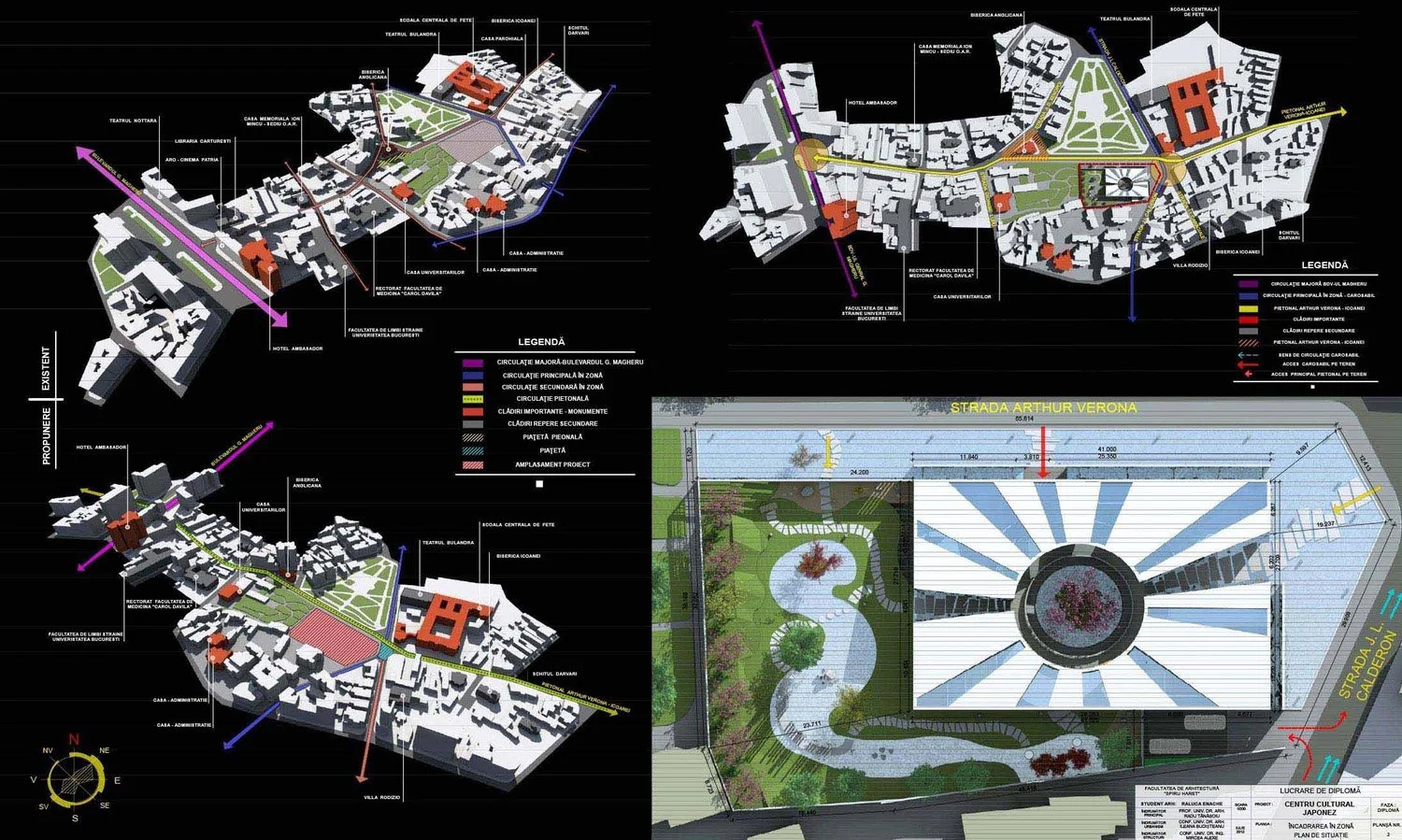
Japanese cultural center ©Detail Movement
JOIN OUR NEWSLETTER
Loving this article? Don’t want to miss goodies like this, discounts, and more? Then join our “Thoughtful Edit” interior newsletter. A newsletter unlike any other where the content is shaped by the community to serve the community.

6. You'll start to be the queen/king of deadlines!

Deadline sketch ©Detail Movement
You won't know what day of the week it is, but you will know when the deadline is, and that it is approaching fast. Everything will start happening in hours and minutes! You'll discover your productivity and creativity really damn fast. Why? Let's share an example: it's 3 in the morning and you ran out of glue for your model-making for the school project. And the deadline is in 10 hours. Going to buy some at this hour is out of the question. What do you do? Besides panicking? Let me know your solution. You’ll discover your really are creative!
When I say you’ll become queen/king of deadlines, what I mean is that you'll have no power or control over it. The only thing you can do is learn how to organise yourself and your work better so that you'll always have 5 more minutes to do rule no.4 (always double-check) and still be able to get some sleep (although that is a relative term as well). You'll discover your limits. The limits of your body, and mind, which brings me to no. 7.
7. Remember to eat and eat healthily! And to sleep!
Whilst working on a tight deadline, or deadlines (yes, multiple can happen at once), you'll enter what I call "the trance". The trance is that place in which you forget to eat, although you've registered in your mind that hungry feeling, there is no possible way you could squeeze in 10 minutes for a lunch /dinner break. Food or deadline, deadline or food?? Luckily for me, while I was going through that in Architecture Uni, my parents would be a constant reminder, telling me to “eat, now"!! Thanks, guys, for being my alarm clock, and ensuring that I was eating healthy (not all chips and Cola).
Also, sleep deprivation (another "fav" of all architecture students), is a whole other problem. And a real one!
Once that deadline approaches fast, you discover the many, fruitful hours that the night has to offer! You decide to forsake sleep and you stock up on some coffee & chocolate to keep your eyes open so that you can finish your work. Yes, it really does get to that - I'll write another time about why it gets to this point. But even so, trust me when I say that if you get to the point where you are making the same mistake 3-4 times in a row, and it's past 3 - 4 in the morning, give up & go to sleep. You are more likely to ruin your project than to get something productively done.
Always, always listen to your body. It knows best! And it will signal you when it’s time to rest. Either you go gently, or your body will do that for you (getting dizzy, feeling sick, and even throwing up - yup, that happened)!
You need your sleep, your food, and your health, I cannot stress this enough. Nothing is worth your health (if any student is reading this, trust me - been there, done that)! You can make your deadlines and be healthy too, you just have to organise yourself better and don't slack off. Simple as that! People who pride themselves in pulling "all-nighters", in my opinion, actually show their lack of organisation. Sure, it happened to me as well, but not like 20 times in the last 3 months or something. Be smart, eat and sleep! The slogan for a better life ;)
8. Nurture your love for your craft
"The things you are passionate about are not random, they are your calling" - Fabienne Fredrickson.
You chose this path for a reason, whether you are aware of it or not. If you love what you do, if you started it because you originally found it interesting, then that is all that matters. The rest is just water under the bridge. You can learn from everyone around you, but don't listen to those voices that will try to bring you down, or make you doubt why you started in the first place. You love your craft. There will always be people like that, so ignore them. Move forward. Your life, your choice, your time invested in it. Remember, you cannot get your time back, it's gone forever.
All you can do is spend it doing what you actually love, doing what makes your soul happy, and perfecting your craft. Keep exploring and stay strong. Everything shall pass. No matter what other say.
9. Learn that any criticism can be helpful
Nobody likes criticism. It would be weird if we did. I mean, who would like to hear how bad they are at something? But in some cases, it can be extremely helpful. Criticism is something inevitable and it's a part of life. It will always be around, so you need to learn when it's good to listen to it and how to take it on board to further perfect your craft.
Think of it this way: criticism can be a free feedback on your performance or an aspect or your life. People love to give their opinion on something, matter if it's good or bad. It is human nature. Some people overshare (so thoughtfully) negative opinions on purpose, while others do not. So try not to be affected by it, because what they actually do, is give you solutions for your improvement, and for free!!
So: criticism is locating a problem, offering a solution and a way to improve, which gives you a way to master your craft. That's a great way of reframing it, wouldn’t you say?
10. Document your progress
One of the best things you could do really! The obvious reason for this is in case you lose your stuff, you have proof that you actually did the things you say you did (which came in handy in Uni - where projects would get lost - yes, it happened, more than once, actually).
But the main reason (my main reason), is so that you can see your personal growth! Sometimes it's easy to feel like you are stuck, that you are not improving, or that something is taking you way more time, while X, Y, or Z has already finished, or improved, or earned more money (whatever the reason).
When you have those moments, taking a trip down progress memory lane will help you get back on track. It will help you to see that you are better than you were yesterday, or a couple of months ago, or even years ago, and that you should just keep going. You’ve got this, you love what you do, it's your passion, after all. And just as everybody is different, so is your progress. You only need to become better than the “you” from 5 minutes ago.
The funny thing is that, by seeing your progress over time, your confidence will also grow. And so it should be. Only you know your projects 100%, from idea to concept, to paper, to reality. So believe in yourself! You are tougher than you give yourself credit for.

Architectural school drawings progress ©Detail Movement
So there you go, detail lovers! 10 BIG FACTS that I learned on my own in Architecture University that nobody told me about.
You know...when you start University, nobody tells you to watch out for these moments that will help you grow into the best version of yourself. To be fair, some teachers did tell us about some of the first rules. But they never answered our evergreen question of "why"? I guess that all falls on our shoulders. You have to put in the work, the time, and the effort (as in all things), to find these "life hacks/lessons" (whatever you want to call them). Maybe that was the whole point, or maybe you only see them after you graduated, who knows?
What life hack did you discover? I would love to know!! Imagine how different everyone's experiences must be and how much we could learn from each other! Until next time!
Raluca x
JOIN OUR NEWSLETTER
Loved this article? Don’t want to miss goodies like this, discounts, and more? Then join our “Thoughtful Edit” interior newsletter. A newsletter unlike any other where the content is shaped by the community to serve the community.

All images that are credited as '©Detail Movement', are done by Raluca Vaduva for Detail Movement. All rights reserved. All pictures that are not my own, I credit them to the best of my knowledge & research, to their offline/online sources. I do not claim ownership over them in any way. If you see your picture on this site and do not wish for it to be displayed, please get in touch and I will remove it or add additional notes at your request.