
I was at an event last week. And while chatting with various women about what I do and saying I don’t love interior design trends, I was met with raised eyebrows and a visible (yet suppressed) urge to ask me why. I am a designer after all, shouldn’t I be all over trends?
What started as a physical resistance in me to even look into interior design trends 11 years ago (when I started my career in interiors) has reached a point of no return. The event last week made me realise I need to be more vocal about this. Not from a personal pov (because, let’s face it, nobody cares if it’s a personal thing), but from a collective pov.
Just like with fast fashion, we have reached a point where we can see the damaging effect the interior design trends (especially the fast interior industry or “fast deco”/”fast furniture” as it is also called) are having on the environment. A quick Google search into fly-tipping will explain why.
What is fly-tipping?
Fly-tipping is the illegal dumping of waste, such as household rubbish, furniture, mattresses, or construction materials, on land not licensed to receive it. It is illegal and a serious criminal offence that can result in fines or prosecution.
You’d be surprised to learn that over 60% of the items thrown away are household waste, white goods (kitchen items such as fridges, freezers, microwaves, etc.), construction waste and items of furniture.
What causes fly-tipping?
We can argue that it’s a mix of economic, structural, and behavioural factors, but it would be remiss of me not to include my industry in this (and its lack of tackling or handling the rise of the fast furniture market). Of course, we need to also factor in costs to legally dispose of such items, recycling facility restrictions, accessibility, reduced collections schedules, and scammers (who pretend to be legal companies and charge money to take items and just dump them in a landfill).
The increasing “trend” of influencers recommending cheap items, paired with an urge to DIY-copy what these influencers and bloggers do (that leads to creating even more waste), multiplied by the rise of fast interiors/furniture industry, equals the image below.
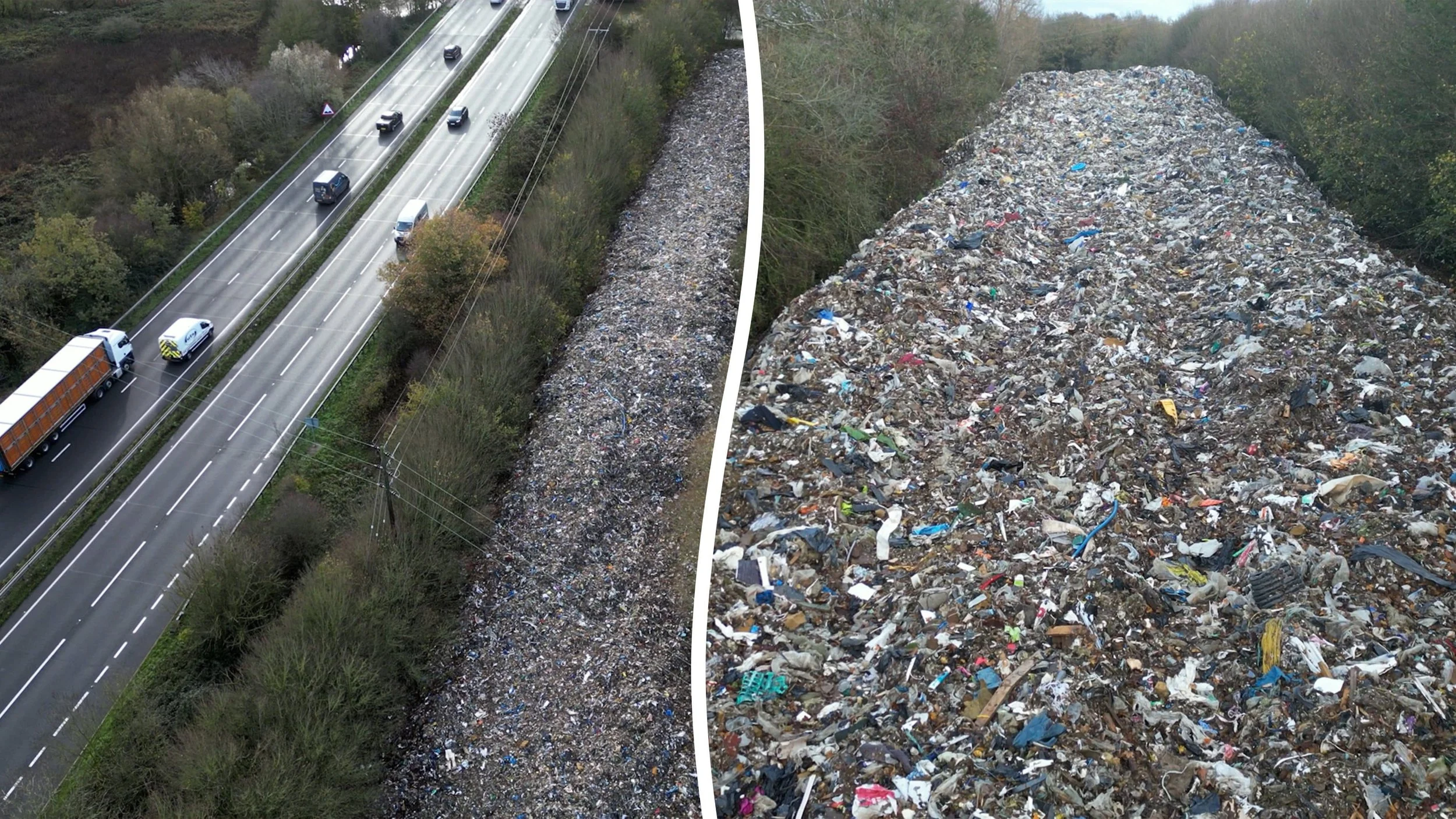
Via Goggle images
I know this is not pretty, and sadly, it’s not the only place. All you have to do is Google “fly tipping uk” and look at the images. Multiply that by multiple locations worldwide, and it will easily compete with fast fashion for the award of “most visible mountain of waste from the International Space Station (ISS).”
Loads of people like to argue that interior design trends are good because they nurture creativity and provide inspiration. While I don’t disagree with that, I do disagree (AGAIN) with their usefulness.
Because when something stops being a source of creative inspiration and becomes yet another source of income/profit for some, as the fast interiors industry clearly is, that is when it becomes a problem.
According to the latest government data for 2024/25, fly-tipping incidents involving single items like furniture and mattresses have increased by 12%, reaching over 201,000 cases in England alone. I am scared to search for the actual number worldwide.
How Interior Design Trends Lead to Fly-tipping
1. Social Media promoting frequent rends/replacements:
Social media pressures consumers indirectly (through social behaviours and FOMO) and directly through ads and influencers, where they update their homes constantly, making you feel that you should do (subsconsciously making you feel that if you don’t you’ll be left behind). They play right into my industry trends, such as “colour of the year” or “ 2026 home trends”. This, unfortunately, leads to promoting discarding items not because they are broken, but because they are no longer “trendy”.
2. Lower Pricing:
It was a shock to me to discover that the armchair that used to cost around £575 in 2020, jumped to over £1k a few years later. Not to mention the overall quality of items that has gone down, but the price has gone up. And I can find its knock-off version today on scam sites costing between £275 - £375. I’ve read hundreds of reviews of people paying for items and never receiving them.
3. Poor Quality (Disposable Design):
Inexpensive furniture is often made from cheap or composite materials (such as plastic or particle boards covered in veneers to look like wood or marble) that either break easily and are nearly impossible to repair or adjust.
4. Recycling Restrictions:
Items are difficult to recycle due to the glues, resins, and mixed plastics used in making them.
5. Real Life/Logistical Challenges:
Many people who buy inexpensive furniture lack the transport to take large, broken items to a recycling centre, or to a repair shop, leading to “convenience” dumping.
All of these things, sadly, lead to statistics like:
An estimated 22 million items of furniture are discarded annually in the UK.
670,000 tonnes of furniture waste are generated each year in the UK.
There were 777,000 fly-tipping incidents involving household waste in 2024/25, a 13% increase from the previous year.
So what can we do?
At the risk of sounding like a broken record, the best thing you can do is work with a proper interior designer.
Your home is the most important space in your life. And as such, it truly deserves your respect, love and care. Both of you deserve to live intentionally and to thrive.
Working with an interior designer will help you create a functional and beautiful space where everything is thought through, intentional, and represents you. They will help you find quality items and create bespoke pieces that reflect your personality and bring you immense (visual) joy.
An interior designer can help you create a space that you will not get bored with so easily, and you will love for years to come. No matter what other people think, what society claims as the next “big” thing or colour of the year.
You will have a space where you can truly be yourself, where you can relax and dream of all the things you’ve always wanted to do. A place that you can leave/pass on as a legacy in your family (should you wish to, of course).
But if working with an interior designer is not accessible right now (because I am not ignorant of today’s world situation and one’s priority), please, please, please, don’t rush your decision.
Don’t rush into buying something because it is cheaper and more convenient at the moment. Instead, save up for that item you really want (maybe you can get it on sale). I promise you, it will keep you happy longer.
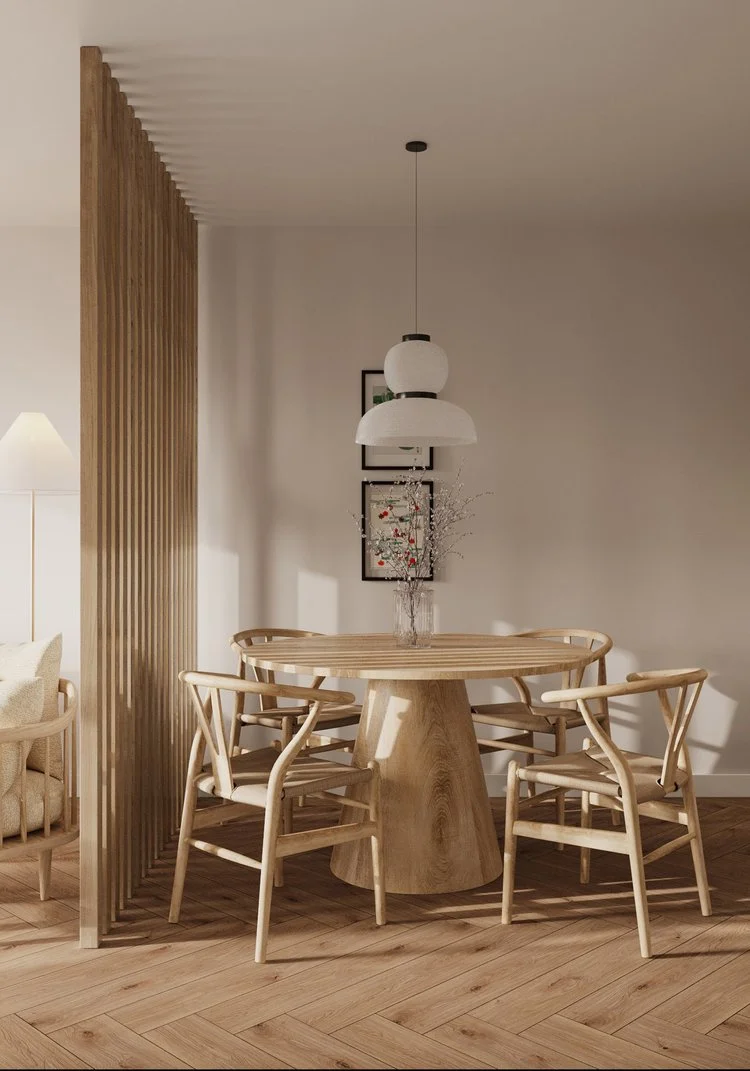
Design by ©Detail Movement
Learn how to spot a “micro trend”
1. If a style has a specific, catchy name that feels like it was born on social media
Like “Cluttercore, or “Barbiecore, “ chances are it’s a fast trend.
Before buying anything, ask yourself if you liked this look three years ago and if you will like it in 3-5y time. If the answer is “I hadn’t even heard of this” (like me, I mean, cluttercore?), then there is your answer.
2. Materials that mimic expensive ones (such as wood, marble, etc).
The fast furniture industry relies on making cheap materials look expensive, especially in photos.
The dead giveaway here is materials that look as if they were printed (wood or stone/marble looking vinyls, hollow plastic “stone,” extremely lightweight metals, or printed marble or terrazzo tiles).
Another way you can tell is through weight. For example, a coffee table made of solid oak might weigh 15 kg, whereas a “fast” version made of hollow MDF or other materials could only weigh 4 kg.
3. “If you see it everywhere” items
If you see the same item over and over again (i.e. the wavy mirror) across multiple social media platforms, ads, blog posts, promoted by influencers, etc., especially within a short period of time, you are looking at a mass-produced trend.
Brands send these items to hundreds of influencers simultaneously to create a sense of fomo and to make you think everyone has that item. This leads to market saturation and “trend fatigue”, making you sick of looking at it much faster than you would a unique or classic piece. And then look for the next big shiny thing.
Once you start seeing the selling tactics and see it’s just a way to make you spend your money on items that are not meant to last or be repaired, you are more than welcome to join my “no interior design trends” club. The membership is free forever, and gold in ROI. ✨
If you made it this far, a heartfelt thank you for reading what felt like a rant about the current direction of the industry. But hopefully useful to you. The more informed we are, the better our decision-making will be. Especially around where we choose to invest our money.
We have all the power. Through the buying choices that we make!
Because at the end of the day, everything is just supply and demand. If there is no demand, there wouldn’t be a fast fashion or fast interiors, or fast-whatever industry comes next. And the world and our nervous systems will be so much better for it. So don’t forget - You have the ultimate power. And always listen to your gut!
Until next time!
Join The Thoughtful Edit
The “Thoughtful Edit” interior newsletter. A newsletter unlike any other, where the content is shaped by the community for the community, to serve the community.
All images that are credited as '©Detail Movement', are done by Raluca Vaduva for Detail Movement. All rights reserved. All pictures that are not my own, I credit them to the best of my knowledge & research, to their offline/online sources. I do not claim ownership over them in any way. If you see your picture on this site and do not wish for it to be displayed, please get in touch, and I will remove it or add additional notes at your request.