
The process of redesigning your home - part 1
Redesigning a home is one of the most intimate and personal experiences one could ever have. Just think about it! The home is the place where we come back to after a busy day, the place where we feel most at ease, safe, and where we can leave our guards down. It is our sanctuary. And that is exactly why it’s never an easy process because it is so personal! It’s an extension of ourselves, of our personality, of our lives. And changing any part of that can feel extremely scary and vulnerable!
What we have to understand is that even though we may not be aware of it, redesigning a home - your home - is going to be a very emotional journey, with its ups and downs. That is why I will share the process of what this journey looks like so that you know what to expect. Not knowing something, especially when doing it for the first time always feels scary. But having an idea of the process, can not only give you a bit of peace of mind but also confidence by knowing what to expect (more or less).
In this first part (because it’s a very big subject and I’ll need more than just one blog post to share everything), I’ll cover the main reasons why it’s scary to even start this process and why most people usually delay it. Then I’ll share the first 5 steps to take when beginning to redesigning your home. So grab a cup of coffee or tea, a pen, and paper, or just save this blog post to have this info to refer back to.

Why is redesigning/redecorating your home scary?
Basically, because of 2 main reasons. 1st - it’s your most intimate and personal space, and it reflects who you are. 2nd - it is the biggest investment you’ve probably made in your life so far. So it is scary! I get it. I would feel the same way if I were to design my own home. And I am an interior designer! But the good news is that this is perfectly normal. We are human beings with feelings and emotions. And it’s ok to feel like that. Just don’t lose sight of why you are redesigning your home. Which brings me to my next point.
When starting any design project, going through these 5 steps first will save you a lot of time, money, trouble, and most importantly - sleep later than the line. Doing something for the first time can be stressful, but by doing these couple of steps first, you’ll help yourself massively, trust me.
These 5 steps are:
Your WHY (imagining your ideal home);
Your VISION (creating a mood board that will keep you going through the low times of the process - inspire you to continue and to remember why you started in the first place).
Your BRIEF (if you don’t know what you want, nobody else can guess it/read your mind);
Your BUDGET (having an idea of how much you are willing to spend will help everybody involved in the process);
Your PEOPLE (finding the right people that will help you through the design process - interior designer/architect, contractor, etc.)
STEP 1 - Finding your WHY
As much as we would love to think that our WHY comes from an inspiring good place (i.e. having the time and money to uplevel your life), the truth is that the WHY is almost always connected to a pain point. A pain point that has gotten so irritating that the only option is to do something about it. This can be anything from past flooding that has left a big stain on the walls that just irritates you whenever you see it, to lack of storage, to having a baby and needing to make space for the little one. Not saying that this one is a pain point - on the contrary - but the lack of space and adjusting to a new way of life can be.
Whatever the reason, it takes a big problem or issue with a person’s home to make she/he think about fixing that problem. And most of us will leave it to the very last minute, trying to delay it or find another way around it, especially if we are unsure about the design process and the disruption that it will have on our lives. Again, this is absolutely normal. There is nothing wrong with trying to find a less disruptive way to fixing a problem.
However, when that problem gets to affect how you live your life, you really have to change something. So, what can you do about it? Understand that your WHY is connected to your emotions.
Go through your home and note down the things you don’t like, or the things that you’ve meant to change but haven’t had the time to deal with yet. Make a list of everything. For example, the list can something like this:
Don’t like that the radiator pipes always make a crackling sound - this might be a sign of some issues with the pipes and/or the heating system;
The curtains are outdated, have holes in them and/or the light can still go through them and wake you up in the morning - a sign of needing better blackout curtains;
The lights always blow out and I need to replace the bulbs on a weekly basis - this might mean that an electrical rewire/update is necessary.
You get the idea. By doing this list, you realise all the things that bother you and stop you from living a better life in your home, which is the whole point of having a home. You can pick one main thing to focus on, a couple or even do everything in one go. This is something that we’ll talk more about later.
STEP 2 - Creating your VISION
Now that you know what are the problems in your home, you can start to think about the solutions. You can even go a step further and imagine your dream result (basically your dream home). This is the fun part, because dreaming costs you nothing, and it also improves your mood. I am sure I don’t need to tell you how you can gather inspiration images (I am sure you have loads of Pinterest boards and magazines at the ready), but I also get how this process can get overwhelming. We are visually inundated every single day, from every corner (tv, social media, internet, your phone, etc.) and you may have already saved hundreds of inspirational photos. So how on earth can you bring that down to just a couple? How can you decide on just one mood board?

1. Top left: bathroom in the Hôtel National des Arts et Métiers, image via Elle Fr;
2. Bottom left: image via Pinterest - Cuyana
3. Top right: interior by Avenue Design Studio;
4. Bottom right: brass Paperweights by Oji Masanori for Futagami.
By using words.
Start by writing down what FEELING you want your new home to have. It might be that you want your new space to feel calm and peaceful. Or perhaps you prefer a space that inspires and energizes you. These feelings will be strongly influenced by your personality and the activities that you do on a day-to-day basis.
You can also write down what your VALUES are. This is a great insight into what is important to you in your life. For example, a value can be centred around family, which means that having the space to enjoy quality family time is important to you.
Don’t forget to also include some daily RITUALS/ROUTINES. This can be a daily yoga practice, a skincare routine that makes you feel happy and relaxed. Or perhaps it’s working out first thing in the morning.
By using words that represent Feelings, Values, and Personal Rituals, you can start to see an underlying theme shaping up, i.e. - calm, relaxed, comfortable, light, ease, peace, family, space, etc. The theme that is shaping up can then be “a calm, spacious, and comfortable home for me and my family”.
Now, how can you pair that with the hundreds of inspo photos that you have? Go through each one and see if it resonates with the theme you’ve just created. To make things easier, select only the images that instantly feel like a “hell yes!”. If you are still left with a lot of photos, go through this process over and over again until you’ve selected 5 - 8 photos. You don’t want to get visually overwhelmed when you look at this mood board but rather be inspired by it.
Quick Tip - if you are down to the last best 20 photos and still cannot decide, you can do this. Take 2 photos - set a timer for 5 seconds, and when the time runs out, pick one. Your mind will instinctively go to the one it prefers most (thank you subconscious)!
STEP 3 - Creating your BRIEF
This is where the list from step 1 comes in handy. By creating that list and having a mood board that represents your goal, you can now create your brief. This brief is (another) list that has all of the things you want to change and/or have in your new home. It can look something like this:
Replacing the carpet with wooden flooring in X amount of rooms/throughout the home;
Rewiring electrics, maybe move/add some light points to better suit your needs;
Have a living room that can receive up to 8 guests;
Have a bedroom that feels like a hotel room;
Update the kitchen worktop to a more durable one, etc. - I think you get the idea.
By creating such a list, not only will it help you to keep on track of everything (not forgetting an item, like say changing the radiators), but it will also be extremely helpful for the interior designer and contractor that will help you with your project. I can say hand on hard that one of the first questions you’ll be asked by any professional/trader will be “what would you like to do/change in your home?”.
By having this list, you can save time and keep everybody on the same page. If you don’t have this, then fear not. There is a process that interior designers go through with their clients at the beginning of every project in order to create this brief. Usually, this process consists of asking you a series of questions about your lifestyle, your likes and dislikes, your pain points (hello step 1), and your budget.

STEP 4 - Creating your BUDGET
This brings me to this next step. For some reason, many people feel the need to hide when asked “what is your budget?”. This can be because they actually don’t know, or simply because they fear they will be ripped off by contractors, traders, designers, etc. They’ve heard such stories many times before, from friends to coworkers to reading stories in blog posts, on forums or perhaps it’s even happened to them before. It’s natural to want to protect yourself and your budget.
Sadly, there are people out there looking to make easy money, not caring about the client who is going through a very vulnerable time and process. But the good thing is that there is only a small percentage of people who do that. Most trades, interior designers, architects, contractors all want to help you. Why? Because that is the reason they started their business in the first place - to help people, change their lives and create something beautiful in the process.
The only reason why we ask you about your budget is so that we can get a sense of what we can do to help you. When we have the brief and the budget we can really start to see what can truly be done and what is out of reach. Let’s say you have £500 and you go into a showroom to buy a sofa. But when asked about your budget you refuse to give it. The employee there starts to show you only sofas that cost £2000, £2500, £3500 because he/she has no idea what your budget is. You end up wasting your time and you’ll be sad leaving empty-handed.
Now, I know this is a tough topic, and most of the time, it’s hard to get an idea of how much designing your home will cost. Fear not, I have just the thing to get you started on this bit. I’ve written 2 blog posts on the matter, which I recommend you have a look at here - How to set up your interior design budget (Part 1) and How to set up your interior design budget (Part 2).
I’ve also put together a free downloadable for you to help you start on this process at your own pace, in your own free time. All you need to do is grab it from below (well…on the right).
STEP 5 - Finding your PEOPLE
Finding the right people who will help you carry out the project over the finish line can be a daunting thing. Especially if you’ve never worked with any trader before. But here are a few tips that you can follow to find the right people. After all, redesigning your home is no small thing.
1. Interior Designer
There are many schools of thought that will say “Why work with an interior designer when I can do this by myself?”. While this is true, the end result might not be the one you were after. An interior designer is a professional who will help you create a design that works for you from a functional point of view, saving you time, stress, and money in the process. I often like to make this analogy (although a bit harsh) - you could always take your own teeth out, but you don’t do that, do you? You go to the dentist for that. You trust the specialist. In the same way, working with an interior designer will often help you get the best results. Here is the truth. You don’t have to spend a fortune to transform your home. It’s ok to make small changes if that is all you need. It doesn’t always have to be a huge transformation. It can be a tiny one just as well. If it’s serving you, it doesn’t matter how big or small the change is. But more on this in the next part.
How to choose the right interior designer to work with?
Choosing to work with an interior designer is, like everything else, a matter of personal taste and common interests. Just as you look at a product’s reviews before buying it, you can look for what other clients have said about the designer and see if anything resonates with you.
You can also look at their projects, blog posts (if available), and social media to see if you like their style, align with their values, or if you like how they think/talk about certain topics. If you have any questions, just ask. Most designers are open and love to talk about interior design (it’s their passion after all). But most importantly, trust your gut. You can always have that initial face-to-face meeting (or online in these pandemic days) and see if you connect.
2. Contractor
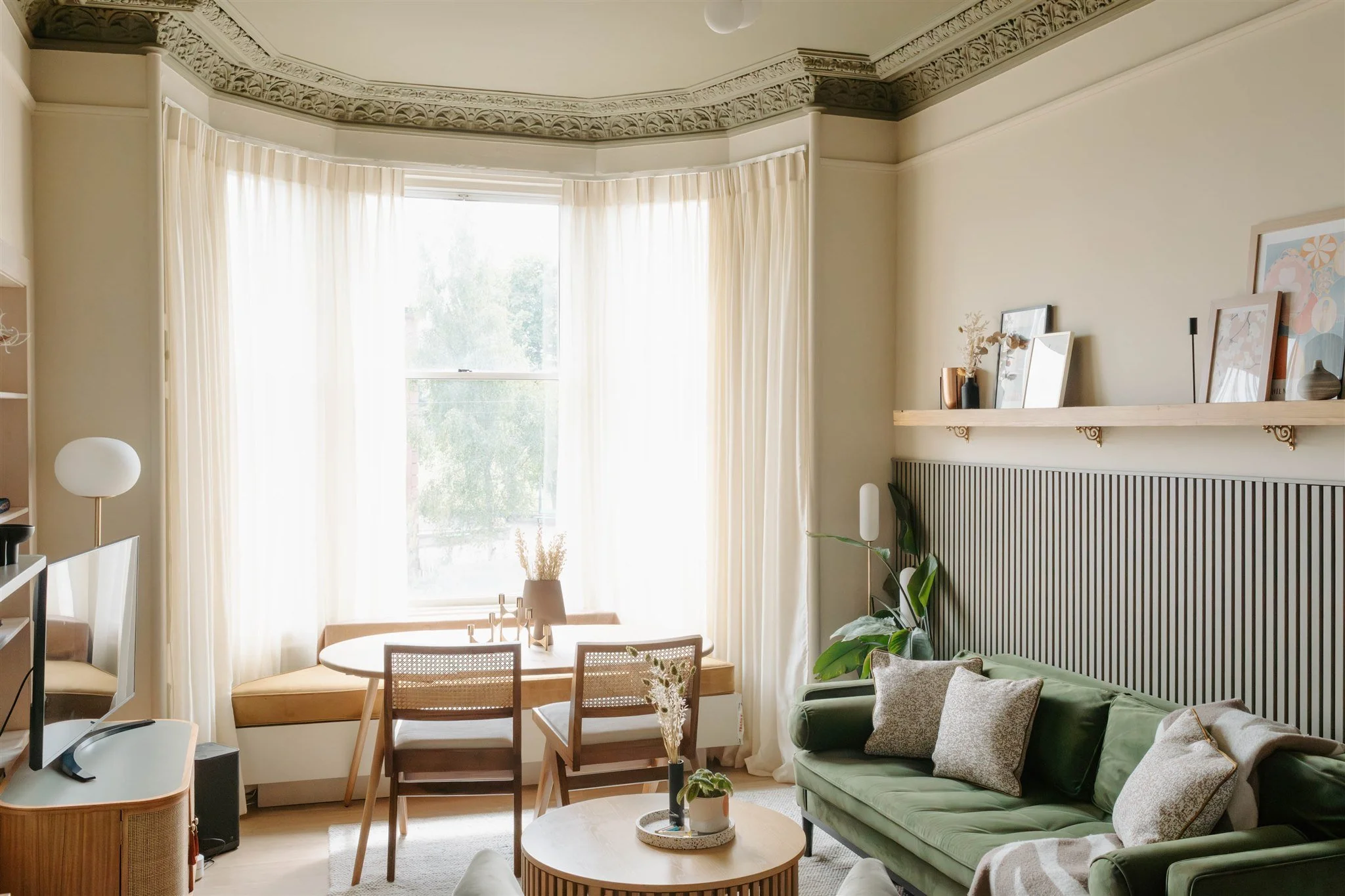
Photo by Studio Gently, Design by ©Detail Movement
Now, when it comes to hiring a contractor to work on your home, you can follow the same steps you did for finding an interior designer, but you can also ask them these 5 questions to help you decide whom to hire.
Are they licensed and/or insured? If something in the project goes wrong and the contractor is not licensed and insured, any damage or mistake made can be harder to fix.
How many projects are they currently working on? We all like to think that we are the only project that they are currently working on, but often the reality is that they run a business, and if they can, they will take on multiple projects at once. This isn’t necessarily a bad thing, it just means that you have to find out if they have the “manpower” to deliver yours. Otherwise, you might run the risk of your project taking a lot more time than you originally planned.
What is their role in this project? Are they going to be the principal contractor (meaning that they will look after your home/site for the duration of works) or will just be there to do the kitchen or bathroom for example and then gone? This difference will affect not only how smoothly the project runs but also the overall budget. I’ll be sure to make a separate blog post on this topic as it’s quite important. But if you are running short on time, just google “principal contractor duties, meaning, and obligations ” to find out more information.
Don’t be afraid to ask for past clients’ referrals and project photos to get a sense of what their work is like.
How much do they charge per square metre and how long does it usually take them to do a project? While both these things are subject to change depending on your project, if you can establish an estimate upfront (or at least a rough idea), you can get a better sense of how they work.
BONUS - How do they communicate with their clients? While this answer can vary from contractor to contractor, a same-day answer is a good sign that your contractor is on top of things. Even if they might not know the answer just yet, it shows that they are working on the issue.
Now I’ll cover more of this next time, but as a rule of thumb, when you are looking for contractors to come and work on your home, look for more than just one. There isn’t a rule that says “first come first hired”. Shopping around will provide you with different price estimates for the work that needs to be done. This is great for 2 reasons - 1st you get a sense of how much the work would cost (and if you can remake your home now or at a later date), and 2nd - seeing different price points will help feel make a better-informed decision of whom to work with (fewer chances of being ripped off).
Pfeww, I know that was a lot to go through, and I appreciate you taking the time to read this. Just to recap, these are the first 5 steps to take when starting your interior design project:
Your WHY (imagining your ideal home);
Your VISION (creating a mood board that will keep you inspired to continue and to remember why you started in the first place).
Your BRIEF (if you don’t know what you want, nobody can guess it/read your mind);
Your BUDGET (having an idea of how much you are willing to spend will help everybody involved in the process);
Your PEOPLE (finding the right people that will help you through the design process - interior designer/architect, contractor, etc.)
If you have any questions about the process so far, do feel free to pop them below and I’ll make sure to get back to you. I really want this blog post (well most likely series) to be useful to you, so ask away. If you need any help to determine your budget, I’ve put together I am working on creating a service around that. But until then, you can use these checklists that I’ve created to help you through this process. You can download it here for free. If you need help with your project/budget, you can always get in touch. I would be happy to help you.
Have you ever gone through the process of redesigning your home before? Or have you put together a budget for your project in a different way? Let me know your thoughts below or you can always share your experience on Instagram. Just tap @detailmovement and leave your message there.
Looking forward to hearing from you!
Raluca x
Join the Thoughtful Edit Newsletter
The “Thoughtful Edit” interior newsletter. A newsletter unlike any other where the content is shaped by the community for the community, to serve the community.

All images that are credited as '©Detail Movement', done by Raluca Vaduva for Detail Movement. All rights reserved. All pictures that are not my own, I credit them to the best of my knowledge & research, to their offline/online sources. I do not claim ownership over them in any way. If you see your picture on this site and do not wish for it to be displayed, please get in touch and I will remove it or add additional notes at your request.